



People have started asking us this more often lately, and they’re asking before we’ve even booked a survey: copper vs barrier pipe, what’s best under your floor?
If you’ve asked it because you’ve been doing a bit of Googling (or asking AI), honestly, fair enough. It’s a sensible thing to check, and we’d rather you ask up front than worry about it later.
Short answer: you can use both copper and barrier pipe in domestic heating, as long as an engineer installs them properly. The longer answer is, it depends where the pipework is going, what the layout is like, and what finish you want.
Here’s our thoughts.
First things first, what is barrier pipe?
A lot of people say “Speedfit” when they mean plastic pipe, but the important bit is the word barrier.
Manufacturers make barrier pipe specifically for central heating systems. It has a layer that helps reduce oxygen getting into the system water, which matters because oxygen can contribute to corrosion over time.
So no, nobody’s ‘chucked in cheap plastic because they couldn’t be bothered’. Engineers use barrier pipe as a standard modern option when they fit it in the right place and fit it properly.
Copper vs barrier pipe, the honest differences
Most people assume the cost difference is all about the material. In reality, the bigger difference is usually labour.
Copper generally takes longer to install. It needs cutting, jointing, shaping, and it’s slower to route through awkward spaces under floors. Barrier pipe can often be run in longer lengths with fewer joins, which can be quicker and can reduce the number of joints in places you can’t easily access later.
That’s why a full copper install usually costs more. It’s not because we’re trying to upsell you, it’s because it takes longer to do properly.
Where copper makes the most sense
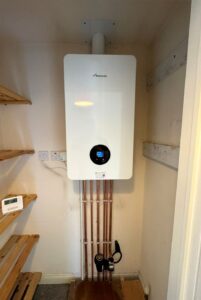
Copper is brilliant where it’s visible. It looks tidy, it holds its shape, and it gives a neat finish around boilers, in airing cupboards, or where pipes run down walls to radiators.
It also suits older properties where customers want everything to match the original installation. If your home has been copper throughout for decades, it’s completely understandable to want the new work to keep that same look and feel.
Where barrier pipe makes the most sense
Under floors, barrier pipe is popular for practical reasons.
Here’s a mid-install example. We haven’t finished this run yet, but it shows the tidy routing and protection we mean under floors.
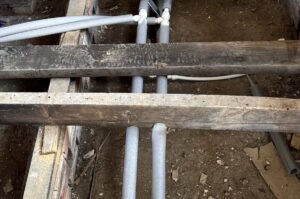
It often allows longer continuous runs, which can reduce the number of joints hidden under the floorboards. That’s a win, because if anything ever decided to misbehave, joints are usually the first place you’d go looking, not that we’re saying yours will, calm down. 😉
Barrier pipe flexes, so we can route it through joists and awkward spaces without forcing loads of joins into tight corners. Done correctly, it can be a really sensible option under floors.
Copper vs barrier pipe, fitting matters more than the material
This is where we’ll be blunt. If you want a reliable heating system, good installation beats the “copper vs barrier pipe” argument every day of the week.
The questions that really matter aren’t “copper vs barrier pipe”. They’re the boring practical ones.
Where are the joints going? Are they accessible? Is the pipe protected through joists, clipped properly, and pressure tested before floors go back down?
A well planned installation can outperform ‘copper everywhere’ when copper forces awkward joins and hidden corners. The material isn’t usually the problem, it’s how it’s been planned and fitted.
Copper vs barrier pipe, what do we do at Housewarmers?
Our usual approach is copper where it’s visible, because it looks better and gives a neater finish.
Under floors, we generally install barrier pipe, because it’s practical, it can reduce hidden joints, and it’s a standard modern approach when installed properly. That said, every job is a bit different, and the final method is based on what makes the most sense from the survey and during the installation.
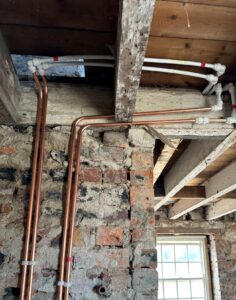
Here’s what that looks like in real life, copper where it needs to be neat and solid, barrier pipe under the floor.
If you have a preference, tell us before we quote
We’re more than happy to do copper throughout, barrier throughout, or a mix of both. Just tell us your preference before we prepare the quote.
That way we can specify it clearly, price it fairly, and make sure you get exactly what you want without any surprises.
Quick final thought
Copper is a great choice when it’s on show, completely understandable.
Want copper under the floor “just because”? That’s fine too, it just usually costs more due to the extra labour, and it doesn’t automatically mean the system will perform better.
Not sure what’s best for your home? Ask us. We’ll talk you through what we’re proposing and why, in plain English.
And yes, if you’ve been using AI to help you think of questions, we see you. We don’t mind. It’s better than suffering in silence and assuming the worst.
Links we thought you might like 😊
What boiler is right for me?
Does Housewarmers offer finance?
What to do if my radiators aren’t heating up?
The all important reviews!! (Yell)